🚨Scam Alert: Ignore any emails or messages from unauthorized Gmail accounts claiming to represent us.
🚨Scam Alert: Ignore any emails or messages from unauthorized Gmail accounts claiming to represent us.
On-Page SEO Perth
Your website can have great services, strong products and valuable information, but if search engines cannot clearly understand your pages, you may miss valuable organic search opportunities.
Our on-page SEO services in Perth focus on improving the elements that search engines and visitors use to understand your website. That includes your content, keywords, title tags, meta descriptions, headings, internal links, URLs, images, page experience and technical on-page signals.
We combine search intent, keyword research, content optimisation and technical SEO to make important pages more relevant, useful and easier to understand. The goal is not simply to improve rankings. It is to attract the right visitors and turn more of that organic traffic into enquiries, leads or sales.
What Is On-Page SEO?
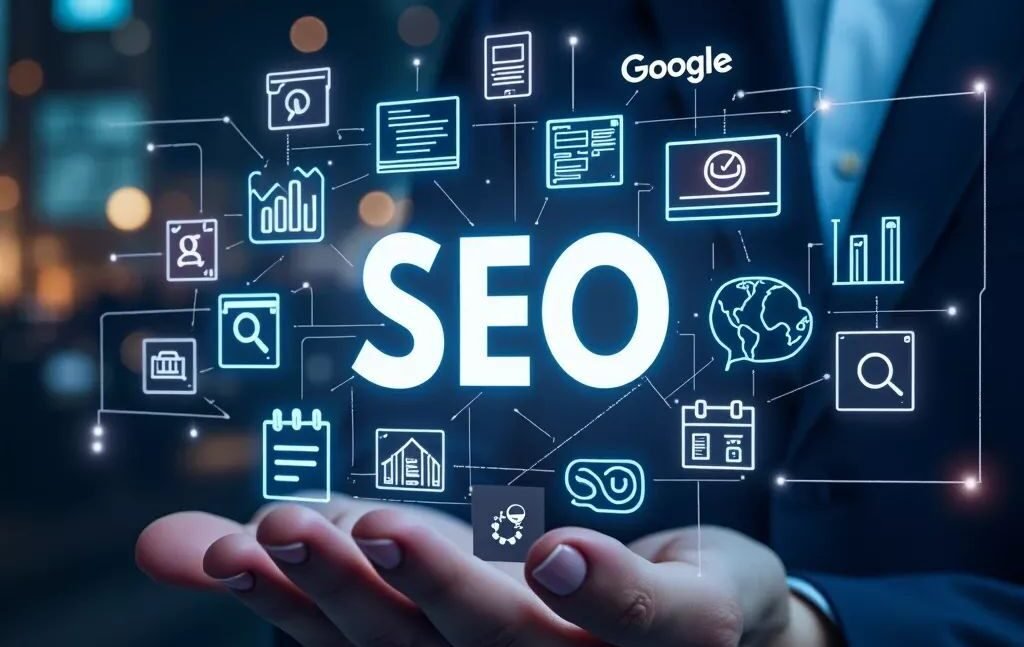
On-page SEO is the process of optimising the elements on your own website to help search engines understand what each page is about and how well it satisfies a user’s search.
It includes the visible content on a webpage as well as elements such as title tags, meta descriptions, headings, URLs, internal links, images, page speed and structured data.
For a Perth business, effective on-page SEO means creating pages that clearly communicate what you offer, who you serve and why your information is relevant to the people searching for it.
It is not about inserting a keyword into every paragraph. Modern search algorithms consider the overall meaning, relevance, quality and usefulness of a page.
How On-Page SEO Helps Search Engines Understand Your Pages
Search engines analyse many elements of a webpage to understand its subject, purpose and relevance.
Your page content provides the main information, while headings help organise that information into a clear hierarchy. Title tags and meta descriptions provide additional context, internal links connect related pages, and a descriptive URL can reinforce what a page is about.
Search engines can also interpret relationships between topics, entities and concepts within your content.
That means effective optimisation is about making the whole page coherent. Your title, headings, content, links and supporting elements should all point towards the same underlying topic and search intent.
What Is the Difference Between On-Page and Off-Page SEO?
On-page SEO focuses on changes made directly to your website. This includes content, keywords, title tags, meta descriptions, headings, internal linking, URLs, images, user experience and technical page elements.
Off-page SEO focuses on signals outside your website, such as backlinks, brand mentions and other external indicators of authority.
The two work together, but on-page SEO provides an important foundation. Building authority to a page is much more useful when the page itself is relevant, well structured and genuinely helpful.
Improve Your Website
Ready to improve your organic visibility?
Find out where your website has on-page SEO opportunities and which pages should be prioritised.
Why Is On-Page SEO Important?
Your website needs to work for two audiences at the same time: search engines trying to understand your pages and people deciding whether your business can help them.
Strong on-page optimisation connects those two needs.
Instead of treating SEO as a collection of isolated ranking tricks, we look at how content, structure, relevance, usability and conversion opportunities work together.
Improve Search Rankings and Visibility
There is no single change that guarantees a higher ranking.
However, well-optimised pages give search engines clearer information about their subject and relevance. Improving content, headings, metadata, internal linking and other page elements can strengthen the signals surrounding a page.
We focus on the pages where there is a genuine ranking opportunity rather than making identical changes across your entire website.
Reach the Right Audience
More traffic is not necessarily better traffic.
Keyword research helps identify the terms, questions and phrases your potential customers actually use. We then consider the intent behind those searches to determine which keywords belong on which pages.
This helps your website target relevant searches from people who are more likely to need your products or services.
Increase Engagement and Conversions
A visitor who cannot quickly find the information they need is unlikely to become a customer.
On-page optimisation considers what happens after the search result is clicked. Clear content, logical page structure, readable copy, useful internal links and well-placed calls to action can make it easier for visitors to take the next step.
For service businesses, that next step may be a phone call, enquiry form, quote request or consultation.
Build Website Authority
Website authority is not created through keyword repetition.
It is supported by useful content, relevant pages, logical internal linking and a website that demonstrates knowledge around the topics that matter to its audience.
By improving important pages and strengthening relationships between related content, you can build a more coherent topical foundation across your website.
Stay Visible in AI Search
Search behaviour is changing as AI-powered features become part of the search experience.
Pages that provide clear answers, explain concepts thoroughly and use consistent terminology are easier for modern search systems to interpret.
We optimise for people first while making important information clear and well structured for search engines and AI-driven search features.
What Are the Main On-Page SEO Factors?
On-page SEO is made up of multiple elements that work together. A strong page does not depend on one keyword or one technical setting.
Content should match what the searcher is actually trying to accomplish.
An informational search may require an explanation or guide, while a commercial search may require service details, benefits, proof and a clear next step.
We analyse search intent before deciding what a page should say, what topics it should cover and how deeply each topic needs to be explained.
Keyword research identifies relevant opportunities within your market.
We consider search terms, variations, related phrases and the intent behind them rather than relying on exact-match keywords alone.
Keywords should appear where they make sense, including relevant headings and body content, but natural language always comes first. There is no universal “optimal keyword density” that makes a page rank.
Your title tag helps search engines and users understand the main subject of a webpage.
A well-written meta description can provide additional context and give searchers a reason to visit your page.
We optimise both around relevance, clarity and click potential rather than writing titles that simply repeat the same keyword.
A clear heading structure makes complex information easier to navigate.
The H1 communicates the main topic, while H2s and H3s organise supporting subjects. Deeper heading levels can be used when they add meaningful structure.
Headings should describe the content that follows rather than being used simply as containers for keywords.
Internal links connect the different parts of your website.
Relevant internal links can help users discover related services and supporting information while helping search engines understand how pages are connected.
We look at important commercial pages, supporting content and opportunities to strengthen pathways between them.
Images can improve understanding and engagement, but they also need to be handled carefully.
We consider image dimensions, compression, appropriate formats, filenames, alternative text and loading behaviour to support both accessibility and performance.
A useful URL should be concise, descriptive and understandable.
We aim for a Google-friendly URL structure that reflects the page topic without unnecessary words, parameters or confusing naming conventions.
Existing URLs are reviewed carefully because changing a web address without the right redirects can create avoidable SEO problems.
A page can rank and still fail if visitors cannot use it comfortably.
Readable text, logical sections, clear navigation, mobile-friendly layouts and useful calls to action all contribute to a better experience.
Good UX also helps visitors understand your offer and decide what to do next.
Page performance affects how easily people can interact with your website, particularly on mobile devices.
Core Web Vitals provide measurements related to loading performance, responsiveness and visual stability.
We consider performance as part of the wider on-page experience rather than treating page speed as a standalone ranking solution.
Semantic HTML helps communicate the role and structure of different elements on a webpage.
Structured data, including appropriate Schema markup, can provide search engines with additional machine-readable information about supported content and entities.
Both can support clearer interpretation of a page, but neither replaces useful content or good site architecture.
How Does On-Page SEO Work?
Our process starts by understanding your business, website, audience and search landscape before making optimisation recommendations.
1
Research Search Intent and Competitors
We research relevant search terms and analyse the pages currently competing for important searches.
This helps identify what users expect to see, what competitors are doing well and where your website may have a realistic ranking opportunity.
We then use those insights to determine the purpose and direction of each priority page.
2
Audit Existing Pages
e examine the current state of your important pages.
This can include title tags, meta descriptions, headings, body content, keyword relevance, internal links, URL structure, mobile usability, page speed and other technical elements.
The audit helps prioritise the changes most likely to provide meaningful value.
3
Optimise Content and Page Elements
Once opportunities are identified, we implement the relevant changes.
Depending on the page, this may involve improving content, restructuring headings, refining metadata, strengthening internal links, improving images, updating URLs or addressing technical issues.
Every optimisation should support the page’s purpose rather than being added simply because it appears on an SEO checklist.
4
Measure Performance and Refine
SEO requires ongoing measurement.
We monitor relevant performance signals such as organic visibility, search queries, rankings, traffic and conversions to understand whether the work is producing the intended outcome.
The results can then guide further optimisation and prioritisation.
Find Your On-Page SEO Opportunities
Let BloomIX SEO identify the pages and SEO improvements that can make the biggest difference to your website.
How to Improve On-Page SEO
Improving on-page SEO does not always require a website redesign.
Many websites already have useful pages that can perform better with clearer structure, stronger content, better search intent alignment and more effective internal linking.
Create Content That Fully Answers Search Intent
Start with the user’s reason for searching.
The page should answer the main question clearly and then provide the supporting information needed to make a decision or understand the subject.
For commercial pages, that may include services, benefits, process, suitability, proof and a clear next step.
Optimise Titles, Headings and Metadata
Your title tag, headings and meta description should work together.
The title should accurately represent the page, the headings should organise its information and the meta description should provide useful context for searchers.
This creates a more consistent experience from search result to webpage.
Strengthen Internal Links Between Important Pages
Identify the pages that matter most to your business and make sure relevant supporting content connects to them.
For example, an educational page may naturally link to a related service, while a service page can link to supporting information that helps a potential customer make a decision.
Improve Page Experience and Readability
Break complicated information into logical sections, remove unnecessary repetition and make important information easy to find.
We also consider mobile usability, navigation, content layout and calls to action so visitors can move through the page without unnecessary friction.
Optimise Images and Media
Images should enhance the page without unnecessarily increasing load times.
We optimise relevant media while considering accessibility, visual quality and performance.
Improve Content for AI-Driven Search
AI-driven search relies on information that can be interpreted accurately and placed into context.
We make important answers clear, use consistent terminology and cover closely related concepts where they genuinely help the user.
The goal is not to produce content specifically for an AI system. The goal is to create information that is useful, clear and easy to interpret.
Optimise Existing Pages Without Rebuilding Your Website
A website rebuild is not automatically an SEO strategy.
Before recommending major structural changes, we identify what is already working and where existing pages have untapped ranking potential.
In many cases, targeted improvements to content, metadata, internal links, URLs, UX and technical elements can deliver more value than starting again.
Free SEO Consultation
Let's Talk About Your SEO Goals
Tell BloomIX SEO a little about your website and what you want to achieve. Our team can help identify potential on-page SEO opportunities.
How to Do an On-Page SEO Audit
An on-page SEO audit looks at how effectively individual pages communicate their topic, relevance and value.
Review Titles and Meta Descriptions
Check whether important pages have unique, accurate and relevant title tags and meta descriptions.
Duplicate, vague or poorly targeted metadata can make it harder for users and search engines to understand the purpose of a page.
Check Heading Hierarchy
Review the structure from the H1 through supporting headings.
The hierarchy should make sense to a reader and accurately reflect the topics covered on the page.
Evaluate Content Quality and Completeness
Assess whether the page provides enough useful information to satisfy its intended search.
Look for outdated information, thin sections, unnecessary repetition, unanswered questions and areas where the content could demonstrate greater expertise.
Analyse Keyword and Semantic Relevance
Look beyond exact keyword mentions.
Assess whether the page covers the concepts, entities, questions and terminology that naturally belong to the topic.
This creates stronger semantic relevance without relying on repetitive keyword use.
Review Internal Links and URLs
Check whether important pages are properly connected and whether URLs are clear and descriptive.
Internal links should make sense in context and help users navigate the website.
Check Technical SEO and User Experience
Review factors such as indexability, mobile friendliness, page speed, Core Web Vitals, image performance and other technical elements that could affect access or usability.
When Does On-Page SEO Deliver the Most Value?
On-page SEO can help at different stages of a website’s growth, but some situations offer particularly strong opportunities.
Improving Underperforming Pages
A page that already receives impressions but attracts few clicks or conversions may have untapped potential.
Improving its search intent alignment, content, metadata, structure and user experience can help make better use of the opportunity already present.
Growing Organic Traffic From Existing Content
You may not need hundreds of new articles to increase organic traffic.
Existing pages can often be expanded, updated, better structured or internally linked to capture more relevant searches.
Supporting Website Conversions
SEO traffic should support business objectives.
We consider how visitors move from search results through your page and towards an enquiry, quote request, purchase or other meaningful action.
Strengthening Relevance for Competitive Keywords
Competitive searches require more than placing a keyword on a page.
Strong relevance comes from useful content, clear structure, appropriate terminology, internal relationships and an experience that satisfies the searcher’s needs.
Our On-Page SEO Services in Perth
Our on-page SEO services are designed for Perth businesses that want their existing website to work harder in organic search.
We combine strategic research with practical page-level optimisation, focusing on the pages and opportunities most relevant to your business.
We improve your content so it provides clearer, more complete answers to the searches you want to attract.
This can include refreshing existing copy, expanding important sections, improving structure and aligning content with search intent.
We identify relevant keywords and analyse how people search for your products, services and information.
The research informs page targeting rather than forcing every keyword onto the same URL.
We optimise title tags and meta descriptions to communicate page relevance clearly and support stronger search-result presentation.
We build logical connections between related pages to improve navigation, strengthen page relationships and support important commercial URLs.
Technical optimisation can include URL structure, indexability, mobile usability, page performance, structured data and other page-level technical considerations.
We consider the experience users have once they arrive from organic search.
Improving content presentation, navigation, calls to action and page clarity can help more qualified visitors take the next step.
We optimise images and media to support page speed, accessibility and the overall user experience.
Improve the Pages That Matter Most
Get a focused on-page SEO strategy designed around your website, audience and business goals.
Why Choose Our SEO Agency in Perth?
Good SEO should be connected to a business objective.
Rather than treating optimisation as a list of technical tasks, our approach considers your market, customers, competitors, website and commercial goals.
Proven SEO Strategies and Results
Our SEO approach is based on research, implementation and measurement.
[ADD VERIFIED COMPANY EXPERIENCE, YEARS IN SEO OR SPECIFIC RESULTS HERE]
Where case-study data is available, we use measurable outcomes to demonstrate what the work achieved rather than relying on vague claims.
Experienced On-Page SEO Specialists
On-page SEO sits at the intersection of content, search strategy, technical SEO and user experience.
Our specialists bring these areas together to create practical recommendations that are relevant to the website and its market.
[ADD VERIFIED TEAM EXPERIENCE, QUALIFICATIONS OR SPECIALIST CREDENTIALS HERE]
100+ 5-Star Client Reviews
Strong client feedback can provide useful evidence of the experience businesses have had working with an SEO agency.
[ADD VERIFIED REVIEW PLATFORM/PROFILE AND TESTIMONIALS HERE]
Where possible, include genuine client testimonials with the client’s permission rather than generic statements about customer satisfaction.
On-Page SEO Perth
Want to Improve Your Website?
Send us your website details and tell us what you want to improve. BloomIX SEO can help identify potential SEO opportunities.
SEO Case Studies
Real results provide a clearer picture of what SEO can achieve than general promises.
The following case studies demonstrate how SEO can contribute to traffic, sales and return on investment.
Tripling Sales With UX-Focused eCommerce SEO
This case study shows how combining SEO with user experience improvements can support stronger eCommerce performance.
[ADD VERIFIED CASE-STUDY DETAILS, STARTING POINT, WORK COMPLETED AND RESULTS HERE]
From 600 to 317K Organic Sessions
This result demonstrates the potential of a comprehensive SEO strategy to increase organic search traffic significantly.
[ADD VERIFIED CASE-STUDY DETAILS, TIMEFRAME AND SOURCE DATA HERE]
Comprehensive SEO Delivering a 678% ROI
SEO should ultimately contribute to measurable business value.
[ADD VERIFIED CASE-STUDY DETAILS, INVESTMENT, REVENUE/RETURN AND TIMEFRAME HERE]
How Much Does SEO Cost?
SEO pricing depends on factors such as website size, competition, technical complexity, number of priority pages and the amount of ongoing optimisation required.
A suitable SEO investment should be based on the opportunity and workload rather than applying the same package to every business.
Standard SEO Tier
Suitable for businesses that need focused optimisation across a smaller website or a defined set of priority pages.
[ADD VERIFIED PRICE, HOURS, DELIVERABLES AND TERMS HERE]
Medium SEO Tier
Designed for broader optimisation across a larger website or a more competitive market.
[ADD VERIFIED PRICE, HOURS, DELIVERABLES AND TERMS HERE]
High SEO Tier
Designed for larger websites, competitive industries or businesses requiring a more comprehensive SEO program.
[ADD VERIFIED PRICE, HOURS, DELIVERABLES AND TERMS HERE]
```html
```
Platforms We Work With
On-page SEO principles apply across most major content management systems and eCommerce platforms. The implementation process can vary depending on how each platform handles metadata, content, URLs, templates and technical settings.
WordPress
We optimise WordPress websites across content, metadata, headings, internal links, URLs, images and technical page elements.
WooCommerce
For WooCommerce stores, optimisation can extend across product pages, category pages, collections, content and other commercial sections.
Shopify
Shopify SEO requires consideration of products, collections, metadata, URLs, content and the platform's technical structure.
Wix
We can optimise Wix websites across page content, metadata, headings, internal links and relevant technical elements.
Squarespace
Squarespace websites can benefit from clear page structure, relevant metadata, useful content and logical internal linking.
Adobe Commerce
For larger Adobe Commerce websites, on-page SEO can involve extensive product and category structures, internal linking, content optimisation and technical considerations.
On-Page SEO FAQs
The most important factors depend on the page and its search intent, but effective on-page SEO generally includes useful content, clear topical relevance, strong headings, relevant title tags, internal links, descriptive URLs, good page experience and sound technical foundations.
There is no single checklist that guarantees a ranking. Search engines use many signals to determine which results best satisfy a search.
Many improvements can be made without rebuilding your website.
Existing pages can often be improved through better content, headings, title tags, meta descriptions, internal links, URLs, images, page speed and user experience.
A proper audit should identify which changes are worth making before considering a full rebuild.
Content optimisation aligns a page more closely with the searcher's needs.
It involves understanding search intent, improving information quality and completeness, using relevant terminology naturally and structuring the content so it is easy to understand.
The goal is useful content, not a specific keyword density.
Page speed and Core Web Vitals measure important aspects of page experience, including loading, responsiveness and visual stability.
Improving these areas can make a website more usable, particularly on mobile devices, while also supporting a stronger overall technical foundation.
Different tools answer different SEO questions.
Crawling tools can identify technical and structural issues, search performance platforms can show queries and organic visibility, and analytics tools can help assess what users do after arriving on the website.
The important part is interpreting the data correctly and turning it into practical optimisation work.
SEO performance should be reviewed regularly.
The ideal frequency depends on your website, market and SEO activity. Ongoing monitoring helps identify changes in visibility, traffic, rankings and conversions and provides evidence for future optimisation.
Learn More About SEO
SEO continues to evolve as search engines become better at understanding content, entities and user intent.
Structured Data vs Semantic HTML: What Helps Google and AI Understand a Page?
Semantic HTML communicates the structure and role of content within a webpage.
Structured data provides additional machine-readable information about supported entities and content types.
They serve different purposes and can complement one another, but neither replaces useful content and a clear website structure.
How Long Does SEO Take?
There is no universal SEO timeframe.
Results depend on factors such as competition, website history, technical condition, content quality, authority and the amount of optimisation being implemented.
Some changes may produce early improvements, while broader organic growth generally requires consistent work and measurement.
DIY Local SEO Checklist: 10 Fixes You Can Make Yourself
Businesses can make several foundational local SEO improvements themselves.
These include keeping business information consistent, improving important service pages, reviewing metadata, strengthening internal links, making pages mobile friendly and providing clear information about the business and the locations it serves.
More competitive markets may require deeper technical, content and authority work.
Work With BloomIX SEO
Let's Work Together
Your website may already have valuable ranking opportunities that are not being fully used.
Tell us about your website, your goals and the challenges you are facing. We’ll use the information to understand where on-page SEO could help.
Ready to Grow Your Organic Visibility?
Let BloomIX SEO help you identify and improve the on-page opportunities across your website.
Let's Work Together
Your website may already have valuable ranking opportunities that are being missed.
Our on-page SEO services in Perth focus on finding those opportunities, improving the pages that matter and creating a stronger connection between your website, search engines and potential customers.
Whether you need a complete on-page SEO audit, help improving existing pages or an ongoing optimisation strategy, we can identify where your website can improve and what should happen next.
[ADD VERIFIED PRIMARY CTA — e.g. “Book Your SEO Consultation” / “Request an SEO Audit”]
[ADD VERIFIED CONTACT METHOD / FORM / PHONE NUMBER]